Saturday, December 26, 2020

Fall 2020: Surviving The Junior Year Fire Pits (So Far)


 Fall 2020: Surviving The Junior Year Fire Pits (So Far)

Warning: The following post may/will contain spoilers of various anime series and a movie. If you don't want to know what happens in any of the properties I'm talking about here, it's best if you join me once you've watched the first few episodes of each or the entire thing. But then again, if you want to take that warning with a grain of salt, feel free to stay put.

With that said:

Guess who's back? It's been a few months. I definitely wasn't expecting them to be as busy as they were, but my focus is always trained on school whenever it's in session. The start of the semester wasn't too stressful, actually (minus Stats). It was the middle and last half of the semester that took more energy out of me. My brother started battling a really bad bout of anxiety, schoolwork began to pile up a little too much for my liking, and I didn't get to watch as much anime. On the bright side, I've got a great work study job that isn't food service (which isn't bad, but I wanted better), am a DJ for my campus's radio station (which has been really fulfilling), and have gotten to expand my culinary powers in the kitchen. Apartment life's been treating me well, I'd say! That, and the Hallmark Christmas movies.

In today's post, I will be talking about the three shows (one's technically a movie but was split into three episodes on streaming platforms) I've been watching since I last posted on my blog. I did want to get to the new Haikyuu cour and IDOLiSH7 season while at school, but those are going to wait for now (re-watches of the first cour/season?). A review will be coming out for one show (which I haven't finished yet at the time of this update post), I plan on doing a special analysis post (but will still give the anime a score) for another at some point, and the other isn't getting anything. After this, I will be doing some year end lists to recognize the content I've watched this year. There were so many high notes, and I wouldn't have gotten through quarantine without some amazing shows and openings. Oh, and did I mention Hallmark movies?


Not the time, Jack. Not the time. Wait until the fifth Chronicle Mystery movie airs.

Let's go back to the anime:

Burn the Witch.

This would have been the property I reviewed had I had the energy/enthusiasm back in October, but I didn't. I also still don't. My expectations for this were pretty high. Considering I was a big Bleach stan at 14 (twenty episodes, four filler episodes, two movies, and sixteen volumes worth), I was curious about what Tite Kubo was going to do next after his biggest series came to an end. The premise looked cool, I was into the main characters, and the animation looked awesome. Released in Japan as an hour long movie, the content was split into three roughly twenty minute episodes when it streamed on Crunchyroll. Although it took me about a week and a half to get through this, I didn't mind too much at the end of the day. While Burn the Witch had its enjoyable moments, it never went beyond mediocre.

For starters, the adaptation team skipping over the events of the one shot wasn't a good idea. Kubo initially drew a one shot for a 2018 Shonen Jump issue before it was picked up for another "season" of four two years later. These chapters started running in August before finishing in September, the volume with all five chapters releasing on the same day as the movie's premiere in Japan. Although the one shot is referenced briefly after the final battle, I think adapting it first would have been wise. Since I didn't know what happened in it, I was thrown for a loop when we got dropped into the world with no explanation of how Balgo Parks became a Dragonclad or how the main characters came to know each other. Having it adapted first not only would have been useful, but it could have produced better foreshadowing for Balgo meeting Macy before the events of the movie.

Another thing Burn the Witch doesn't do well is exposition. It takes the easy way out of worldbuilding I see in bad YA fantasy and sci-fi. We either get poorly timed info-dumps or terms thrown into the script like we're supposed to understand them. I'm not sure if this is from Kubo's work or if it was something created during the adaptation process, but I still don't have a strong grip on Reverse London or the organization the two leads work for. Why was Wing Bind created? How are they tied to the Soul Society (which is nodded to in the third episode)? Did Ninny and Noel get recruited? There's so much glossed over, it's honestly surprising. Part of me wonders if it would have been easier to wait until there was more content to adapt. There's only so much ground you can cover in a little over an hour.

There are also too many characters that barely get screen time or development. I really came to enjoy Ninny for all the qualities she has that are similar to Ichigo (the main being that she's a smartass), but I also liked her dynamic with Noel. There were some aspects to the characters I liked, but that was pretty much it. Balgo and Macy make good foils, but the fact that they're based in what seems like petty crushes (the former's more innocent in his crush towards Noel, but Macy's crush on Ninny is "psychotic lesbian" at its finest) made me annoyed. At twenty-one, I'm too old for characters ignoring one half of a duo just because they like the other person more. That has late 2000's comedy anime written all over it. 

Bruno could have been an interesting antihero had his motivation been better explained. A great design can't be the only thing I like about a character. Why didn't he actually go through with killing Ninny and Noel in order to "make things easier?" Why did he suddenly switch from wanting to take out Elly/Cinderella to actually kind of saving her? There are so many questions I have, and that's not even touching the Wing Bind higher-ups, or what was the point of having Billy Banx Jr., someone not even involved in the final fight, take out Cinderella himself by just shooting a beam of light through his finger? Whenever I try to think about all these aspects, my brain turns to mush. This story and these characters could have been so much better, but it feels like there are so many holes that need fixing, it's hard to figure out what needs to be fixed first.

At least the animation is excellent. Studio Colorido brings the vibrancy of Reverse London and Kubo's characters to life. Movement is incredibly fluid (whether human or dragon), the scenery always looks stunning, and it's cool to see what aspects from Bleach's adaptation the staff took but also made their own. Keiji Inai's score had plenty of epic moments, and most of the pieces were more memorable to me than his work on Karneval and The Royal Tutor. I was also happy with the voice acting. It was nice to see some seiyuu I wasn't as familiar with have their time in the limelight and help shape these characters. In particular, Yuina Yamada brings a certain level of sophistication to Noel, it's hard for me to think about who else could have played her. I also enjoyed Asami Tano's brash Ninny, Shimba Tsuchiya's chipper Balgo (even if I didn't like his character that much), and Saori Hayami's dramatic range with Macy.

I wish I had better things to say about Burn the Witch, because while I liked some parts to it, it was still pretty underwhelming. The story and characters had too much missing that the animation, score, and voice acting couldn't fix. Had the one-shot been adapted before they dived into the first four chapters and had the adaptation team waited until there was more content, I could have seen this being more enjoyable then it was. There was some good action, but how good is it when you can't bring yourself to get invested in the story or characters?

6/10


Black Butler's second season.

I feel like at some point when I was fourteen, I declared I would never watch this season. At the time (and even now, TBH), there was/is nothing but bad things said about it. Completely anime original material, Yana Toboso developed two new characters with the anime staff, Alois Trancy and his butler, Claude. No one really seemed to like these two characters for reasons I didn't understand, and the ending was supposed to be a giant pile of s**t. Being the naïve confused weeb that I was, I took in a few spoilers, watched the OVA's (even the Alois focused one), and left it at that. However, when I noticed this popped back on Hulu and Netflix in the past year, I got curious. It'd been six years since I finished Book of Circus and six and a half years since I stopped reading the manga. My taste has drastically changed. Would I still find some of the elements that made me love the show in the first place, even though this material's been disregarded at this point?

The answer is obviously yes. At the time, watching Black Butler was a big step for me. It was darker than some of the anime I saw in 2013, it was one of the first shows I watched by myself, and the rampant homoeroticism flew over my head at fourteen but is completely apparent at twenty-one, especially between Sebastian and Ciel. However, there's a lot of charm to Black Butler. I love how some of the filler subplots from the first season make no sense, how colorful the animation is and seeing the budget improve with time, the engaging story at its core that's also gone off in various directions, the classical scores from both Taku Iwasaki and Yasunori Mitsuda (although I remember more from Iwasaki), and the characters themselves. Aside from one in particular:
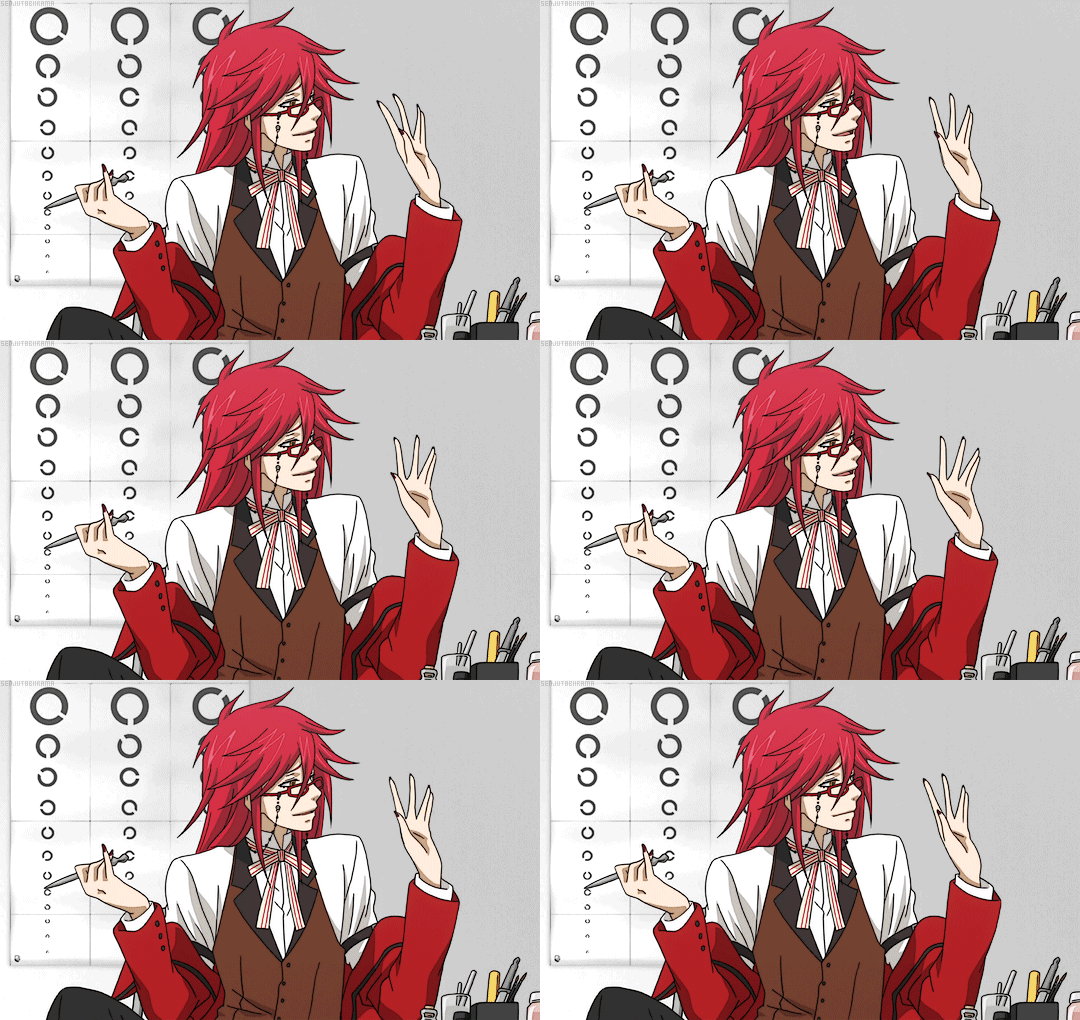

I enjoy how Toboso created such distinct personalities and how they carried over into the anime adaptation. There are so many characters to call favorites here, and I even found myself growing to the ones exclusive to the first season. Black Butler was also pivotal in me realizing I was queer, although I just didn't know at the time. Grell was the main reason.


Please show her more respect than her creators do and refer to her with female pronouns, thank you. It took me six years to do that. The same applies for Arashi Narukami from Ensemble Stars.


Another great queen, even though I haven't really dug into ES yet. One day...

But back to Season 2 proper, all the good feelings I got from this series came flooding back the minute I started it. It wasn't perfect, and I probably should have realistically re-watched Season 1 before diving in, but re-reading the Wikipedia/Wiki episode summaries worked for Kuroko no Basuke, and it actually worked for this. I laughed, I internally screamed, and I jammed out to "SHIVER" every single time (one of my favorite anime openings for sure). The first episode served not only as a great reintroduction to the franchise, but it was also a great introduction to Alois and Claude. Although it does take a while for the staff to dig into the start of their contract, some of the set-up to get there is brilliant. Alois is incredibly childish and can't face the thought of Claude wanting to obtain something he wants (Ciel) because it's shiny and more delectable. Meanwhile, Claude seems to care for his master to the point of thick sexual tension, but then it's revealed he's only a stepping stone in order to get Ciel's soul, something he eventually can't live without. Although both aren't likeable, they're fascinating, especially when you pit them against Ciel and Sebastian. The former may be childish, but the tragedy in his past forced him to grow up fast. And although the latter desires his master's soul, there's a restraint Claude's characterization lacks.

Aside from being an engrossing character study, I was really happy with the second half (minus the ending). Ciel starts the season having lost much of his memory of what happened in Season 1 (including the canon stuff). Anime viewers believed his soul was devoured, but it turns out a crow just snatched it, becoming a free present on the Trancy mansion's doorstep. Why Claude wanted Ciel's soul for this long? I have no clue. The adaptation team also fumbles in confirming that twist to the audience (we find out from Sebastian telling Soma in Episode 5, which is four episodes too late after not so subtle hints), but the payoff is wonderful. After killing Alois's physical body, Claude has the Trancy manor servants convince local police that Ciel is in fact their master. Ciel had just started to remember what happened prior to this season, which makes it all the more convenient when Claude melds Alois and Ciel's souls together so he can have the boy for himself. Ciel casts off Sebastian when the latter tries to save him, but there's more trouble waiting in the wings. It turns out Claude isn't the Big Bad. It's Hannah, another servant who has secrets of her own. I knew about her being a villain before this, but I still liked how it was revealed and executed. Alois's role in this plot was an actual surprise, and what started as a simple rescue mission turns into a feud between butlers in order to get their master back, what the season was building up to all along.

Getting to see all of the characters I loved as a tween was also great. Although I could have gotten more than glorified cameos (one episode with Undertaker isn't enough for the fourteen-year-old fanboy in me) and weird comedic bits, it added to the nonsensical part of Black Butler I think I might now appreciate. There's some beauty in this franchise tripping over itself that never fails to make me laugh. Grell got her time in the spotlight in overdramatic fashion, Ronald Knox made his anime entrance, and the other Phantomhive manor servants just ended up being themselves. Sometimes, that's all I want.

Although there were some iffy drops in the animation this season, I was impressed with the budget increases that balanced out some of those bits. The action scenes were well-done, the character designs had an added splash of color to them, and the storyboards for the main opening have got to have some of my favorite symbolism and framing of all time (minus the homoeroticism since Alois and Ciel are minors). Just don't bring up the CGI horses. Taku Iwasaki's score had plenty of classical punch to support this show's content, whether comedic or dramatic. Finally, the voice acting continued to be excellent. Nana Mizuki did such a great job with Alois's spoiled and heartbroken sides especially. While her voice sounded like Inner Moka's, it was interesting to see her go at it from the angle of a teenage boy. Takahiro Sakurai also did well, Aya Hirano got to show off more of her range before that scandal made her lose work, and everyone else still sounds fantastic. What I've heard of the dub also holds up, too. 

However, that doesn't mean this season doesn't have its problems. Most of Episodes 2-6 feel like padding to stall any development beyond what the writers can control. The Phantomhive servants seeking out a mysterious white stag? Ciel and Sebastian taking a train ride in order to investigate a sarcophagus? The Trancys holding a costume ball where the supporting characters wear culturally appropriative costumes? It all feels random. Granted, the last thing I mentioned does get the plot moving when Claude and Sebastian sign a contract to make Alois the new subject of Ciel's revenge, but it still takes half the show for anything substantial to happen. Even though I watched half the show in two days, it still lagged. I don't think it helps matters when most of the writers for this season hadn't written for the anime before, and they all wrote for the first half (although I didn't mind some episodes on their own).

There are also points where the homoeroticism becomes distracting (not to mention problematic). I'm not just talking about Ciel and Sebastian's relationship here; I'm talking about when the writers try to create sexual tension between Alois and Ciel. Again, they're minors. It's one thing when we get Claude creeping over Ciel's legs (which is still gross, don't get me wrong), but it's another when Alois licks Ciel's face after wondering what color his eye will turn near death and stating that he wants him. I get Alois gamed the system in his past by becoming the former Earl Trancy's sex servant. Him lusting over Ciel still grossed me out. I did my best to shut my brain off as well as I could during these moments, yet I couldn't ignore how creepy the whole thing was.

Like other reviewers have claimed, the ending is really weird. Before forming a new contract with Hannah, Alois (in Ciel's body) decides to turn Ciel into a demon once he is revived. That way, both Claude and Sebastian won't be able to obtain the boy they hold dear, as his soul will be destroyed. When this contract breaks, Sebastian and the new demon Ciel the only ones left standing, they go back to the Phantomhive manor. They live there for about a month before the two leave. You'd think they'd leave earlier given what happened, but no. The charade's more important, I guess. Sebastian asks the servants to watch over the estate while they're gone, and the characters throughout the show get gifts and a letter informing them of the master's death. Although Sebastian can no longer serve Ciel in exchange for his soul, he is still bound to him by his contract, as a newly demonic Ciel won't let his butler forget. They stop at a field with purple and white flowers, where they will be together forever.

I still don't know what the ending was trying to do? Again, the build-up to it was great, and I knew it was coming (big shock), but I didn't like how it was done. It was interesting to see Sebastian reluctantly going along with what he's obligated to do, yet that's the only positive I have. Was it the only solution the adaptation team had to going this deep in developing the ending? Or were they unsure they'd get more material to adapt, so they decided this was the best way out? I can easily imagine Mari Okada working on the final episode in the same vein as that one Snooki clip. No wonder someone who edited Black Butler's Wikipedia page called the Book of Circus adaptation a soft reboot. It essentially was after the mess this ending was to the fanbase.

Despite these problems, however, I was still incredibly entertained by Black Butler II. It was messy, parts made me scream at my laptop, and I still don't know why the ending exists, but that's all part of the fun. Plus, at least we've got the OVA's to wash out the bad taste this season leaves in our mouths. Oh, and Grell. There's always Grell.


In the future, I'd love to talk about both seasons in contrast. That'll come after I re-watch them, though. Having a fresh perspective on Season 1 will be a help.

I also most definitely bought Season 2 off of eBay for under fifty bucks as an end of semester present after I finished it. I regret nothing. The FUNimation Anime Classics set's a collector's item.

7/10

This leads me to the series I'm watching now:
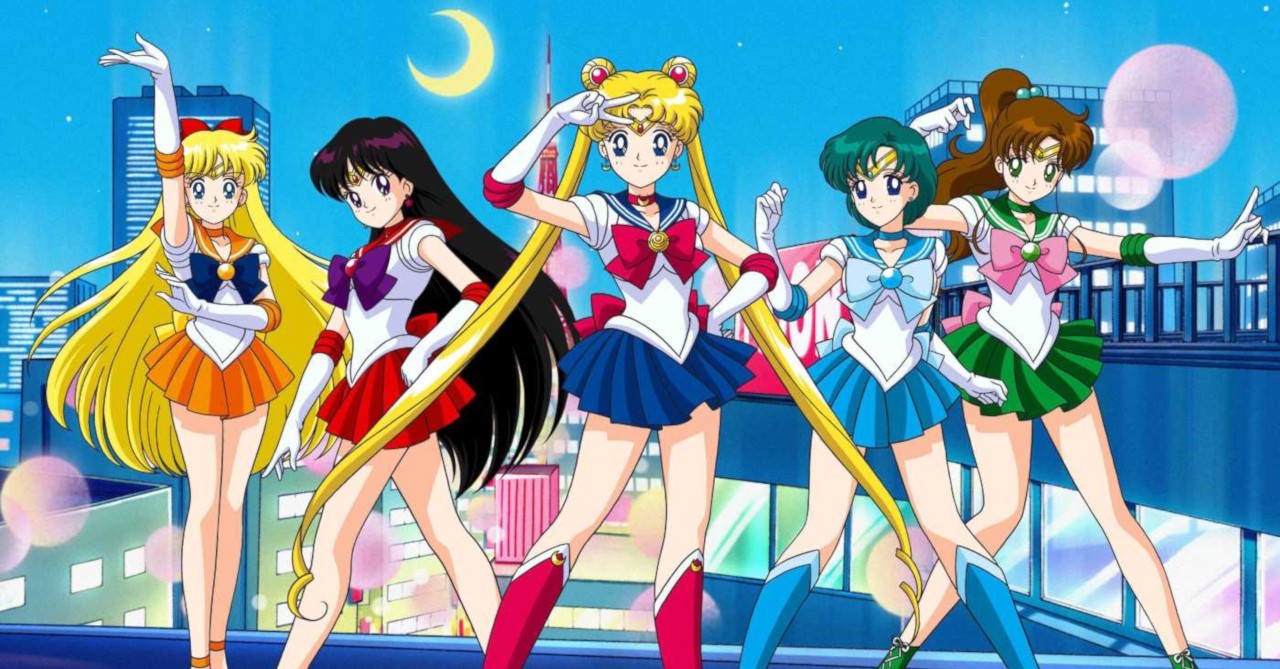

Sailor Moon's first season.

This has been a long time coming. Sailor Moon means a lot to me not only as an anime viewer, but for who I am today. If I hadn't stumbled onto the Sailor Moon SuperS movie DVD at the library when I was five, I'm not sure I would have gotten as much into anime as I am now. This franchise brings me back to a time where there was less to worry about, getting lost in the transformation sequences and the ending of the S movie. There's so much history to this show for me. I've enjoyed following the Viz Media dub as it's come out, and although the original dub will hold a special place in my heart (despite some of its off acting and script), it's been great to watch episodes I've never seen full before outside of GIF's and photos. I even enjoyed Crystal despite its problems in the first year. So now that I'm a junior in college, it seemed like the perfect time to finally dig into the series I'd only seen snippets of.

About two and a half years ago, Luke bought the first half of the first season at Best Buy with a friend of ours from college. It sat in our collection, not getting played, until we brought up the idea of actually starting it before this current school year. Now that we're almost done with it (at the time of this post going up, we have 13 episodes left), I have another part of my heart to give to this series. Although it isn't perfect (the Nephrite and Naru arc was icky), there's still so much charm in seeing Usagi's journey from the beginning. I really like what the adaptation team did to expand the characters and the world Naoko Takeuchi created. The Sailor Senshi are more than just Usagi's comrades. They're fleshed out characters who add some punch to the team. The animation is incredibly colorful and stunning for the early 90's, and the score is classic magical girl at its heart. The new dub is also mostly well-acted, and despite it only being one season, you can tell how much the cast has grown and how comfortable they're starting to get in their roles before the halfway point. The episodic monster of the week formula may be a little old for me, but now, all the shirts and plushies I've collected have finally paid off. I can't wait to get further into the original show and post about it here. The form it'll take is unknown, but I'm excited, regardless. Maybe I'll compare and contrast it with Tokyo Mew Mew, which I'm also watching now (and will cover in the future)? We'll have to wait and see.

In the meantime, that's going to do it for me. I hope you all have a great rest of your holiday season, spend quality time with your families, follow COVID guidelines, and learn something new about the world around you. I'm hoping to get a year-end list post out before the end of the year, but if not, you'll see it in early 2021 (along with a special announcement about this blog's future). Until next time:

Tuesday, August 25, 2020

July and August 2020: Farewell, Humid Days


July and August 2020: Farewell, Humid Days

Warning: The following post may/will contain spoilers of various anime series and a movie. If you don't want to know what happens in any of the properties I'm talking about here, it's best if you join me once you've watched the first few episodes of each or the entire thing. But then again, if you want to take that warning with a grain of salt, feel free to stay put.

With that said:

Okay, the rest of the summer. You didn't have to go that fast. It feels like it was yesterday when I posted my first catch-up post. I blink, and it's now August. Both months brought the routine I've become accustomed to with COVID regulations. I've helped out in the kitchen, finished two fanfics, continued to read and watch stuff, and ventured out to the mall and Half Price Books with a mask and face shield. My best decision? Not exactly, but on the bright side, I got to do some long overdue cleaning.

In today's post, I'll be writing about what I've been watching in July and August (the fourth season of Chesapeake Shores doesn't count, although I binged it in two days). Out of the six shows, I wrote a review for one, but the other five will not get them. Again, that's due to time or not enough motivation to write a review. Kuroko no Basuke: Last Game will also not be reviewed. Future reviews for the next three months in general are TBD due to school, but I'll do my best to at least get one out.

Onward:


Full Metal Panic? Fumoffu.

When I was getting into anime and when I was really getting into anime, I loved looking around my local library to see what they had on hand. I also made a few requests for them so their anime collection could grow. I first heard about the comedic spin-off of Full Metal Panic through a funny moment compilation on YouTube that had this scene from Episode 2 (it never fails to make me laugh). Why I haven’t been interested in watching anything else from this franchise, I don’t understand. I guess I just wanted to watch something that didn’t require twenty-four episodes to get context. My mind was also in a dark place through much of 2013 thanks to one horror movie, and I felt like I needed to watch things that would make me laugh so I wouldn’t struggle to fall asleep at night.


I only got through eight episodes originally, but when I decided to watch this anime again, I made it my mission to get through everything. I liked how the anime held nothing back in regards to its comedy, the score was super fun, and the scenarios these characters got involved in were pretty hilarious. How was Full Metal Panic? Fumoffu at twenty compared to thirteen?


It wasn’t as good, but I still really liked it. Some of the jokes haven’t aged well. There were too many based in potential sexual harassment that made me a little uncomfortable. The rugby episode, despite having some of my favorite content of the show, could have done better with the opposing team. Making them have darker skin and having a few jokes mocking them for being “gorillas?” Not a good look for 2020, I’m afraid.


Despite that, I still appreciated how the writers held nothing back with their plots for each episode/segment. There were plenty of well-timed jokes, great visual gags, and parts that still made me laugh. The characterization was also good for a comedy series. I’m happy viewers who may not be familiar with Sosuke and Kaname can still see why they work well together, even if it’s only in a spin-off series. Their dynamic is a lot of fun. Kaname calls Sosuke out whenever he goes too far, and given that Sosuke’s been raised in a military environment all his life, I can see why he acts the way he does at school. I was also a big fan of the student council president, who was always in style and went through books and fans so fast.


For Kyoto Animation’s first project, I loved how vivid and fluid the show was. They based their style off of what Gonzo had done previously (the character designer returned, for example) but made the show their own at the same time. The score had lots of colorful moments and added to the show’s comedy when it came on at the right times. I also really liked the voice acting. The seiyuu went in with their characters and helped make bizarre moments come to life. I couldn’t see other actors playing them. They’ve made this cast their own, and for that, I applaud them.


Watching this again made me understand why this is a comedic anime staple. There are so many high points, and even though the show can feel utterly ridiculous in some episodes, it doesn’t care. Although I felt like some of the content was weaker this time around, I’m grateful I had the opportunity to finish Fumoffu in the first place. Full Metal Panic's something I'd like to see more of in the future.


P.S. If you don't want to watch the show, please check out the show's opening and ending by Mikuni Shimokawa. They were SMASHES in 2013, and they still SMASH now.


8/10


Zombie Land Saga.

Who else thought this show was going to be a school horror a la Higurashi? No one? Based on the other key visual, I was getting that vibe. To see this was actually a zombie idol show was quite the surprise. The Episode 1 memes never failed to amuse me. The rap battle caught me off guard and was entertaining as hell. But getting to watch the show itself in my college's Anime Club was an experience in itself. Like Full Metal Panic? Fumoffu, this show is unapologetic in its comedy. While moments were embarrassing, I think they added to the show's charm, and I was having the time of my life.

When I watched the full show in English, I didn't find myself enjoying it as much. Part of that was due to having watched the first two episodes before, but it also takes the show a while to deliver its strongest material, which is getting behind why the characters became zombies and do what they do. Although this show has a lot of great highs and unexpected humor, developing the idols (well, most of them) helps balance the awkward hiccups the girls face as resurrected performers. I was surprised by how much I grew to like these characters. It was cool how they were all from different periods of time, since that influenced how they acted and showed how far the world has come in some aspects. Sakura's arc at the end of the show resonated extremely well, especially since I didn't expect her to struggle that much with her self-confidence (I can relate). I'm also happy Lily's trans rap was respectful and didn't make her identity into a gag.

MAPPA never failed to bring a lot of color into this show, keeping character designs and movement consistent, whether they're acting like humans or zombies. Unlike Kakegurui, there was more CG used for the characters, but like that show, it's integrated smoothly and looks nice. The original music written for the show was also great, and I'm happy the English versions sounded just as good (at points, better) than the original Japanese counterpoints (I can't wait for Yugiri to get her chance to shine, if those two cut songs signify anything). As for the score, Yasuharu Takanashi was one of my favorite composers when I started watching anime, so I'm happy he still is producing a lot of great work, this time with the help of Funta7.

Both the Japanese and English voice tracks had great voice acting, and the actors cast work well with their characters to make them shine. Even though Tae speaks in grunts and growls, both Kotono Mitsuishi and Dawn M. Bennett do a great job at making her a distinct presence in the show. My only qualms are Yugiri not having enough screen time despite having some of the most entertaining moments of the show (THE SLAPS) and Kotaro being too much of a douche. Granted, he was funny, but at times, he came across like people think Jeffrey Bowyer-Chapman's coming across in Canada's Drag Race. There were a couple moments where we got to see his heart, but it wasn't as much as I wanted. Other than that, this was a great show. Although I'm not reviewing it, it's definitely one of my favorites from this year despite my initial hesitance.

Tae Yamada is iconic!


9/10


Sengoku Night Blood.

I don't regret deciding to re-watch this show. Even though it has plenty of problems, I find ways to enjoy it. I like how the story goes in a way I didn't expect, I appreciate the writers' attempts to flesh out these characters, the character designs and art style for this show have good foundation, and the score and voice acting have so many highlights. At the same time, though, there was quite a bit of juggling, too many loose plot threads, a few boring characters, and sloppy broadcast animation. I understand why many viewers don't like it, but it still has a place in my heart for not being the worst reverse harem show I've seen. There are better ones out there, though.


Kuroko no Basuke's third season.

Well, guess what's back, back, back again? It wouldn't feel right to end my summer without completing this anime, so I did. And boy, was it a ride! We started off on a perfect note when the show introduced Shogo Haizaki, a former member of the Teiko middle school basketball team, and continued to produce some great basketball games, lead character development in some unexpected places, and one of the best scores I've heard this year. Yoshihiro Ike's new pieces were incredibly creepy and worked every time. "Innen" is, without a doubt, one of the best things I've heard in my life.

The Teiko Middle School arc was also a nice change of pace from the rest of the show, where I finally got to see how the Generation of Miracles lost their way, only playing to obtain victory by all means possible. It was pretty disheartening to see how factors pushed the boys to the breaking point, and most of them didn't even realize it. I understand why Kuroko felt like he couldn't do anything to cut the wire. If he did, he'd be gaslighted (like when Teiko played against his childhood friend during the third year finals, humiliating him, not knowing beforehand because Kuroko almost got a concussion during a previous game, and then going, "Wow, Kuroko. Why didn't you tell us? We could have gone easier on him.") or "asked" to leave the team by Akashi, the leader with a "newly formed" heart of coal.

Who didn't understand it? Kagami and Junpei, which was the first major strike to what could have been an almost amazing season. When they asked Kuroko, "Why didn't you do anything to stop it?" I was floored. Did they not even hear why Kuroko didn't want to? I know it's easy for people to go, "If I was in your shoes..," but Kuroko already felt so much guilt about his old friend quitting basketball and still blames himself for what happened. Saying he should feel guilty is adding more gas to the fire, yet he's fine after this talk and not upset, which...


Sorry. My head hurts just thinking about it.

This started unraveling parts of this season I liked. There were other minor quibbles (discrimination against Eikichi for his skin color; The Zone's entire existence; Kuroko not being the main character of his own franchise), but this affected how I felt about the Seirin vs. Rakuzan game. It was fine up until the last few episodes, where some unrealistic plays were made and all the realism went out the window. My favorite was Kaijo vs. Fukuda Sogo because Shogo's ability was brutal, and seeing how Kaijo counteracted it made great sports anime. It also perfectly planted the seeds for the middle school arc because Shogo was kicked off the team due to Akashi getting annoyed by his antics in an unusually ruthless way at the time.

While we're on the subject of Akashi, I really liked learning more about him. His cold, calculating personality was wonderful to see out on the court, and his OP abilities were over-the-top in the best way possible. However, how his "two personalities" were developed was poor. When Midorima said there were "two Akashis," I was very intrigued. Was he different when he wasn't playing basketball? Was he a person you didn't want to make mad, panicked, or both?

Kind of? I wasn't sure what the writers (and by association, Tadatoshi Fujimaki, since he wrote the source material) were going with; did Akashi have dissociative identity disorder, or did Akashi develop tougher skin due to his upbringing and fear of losing? It felt like they were trying to go for both, with some characters in the past being like, "OH MY GOD IT'S LIKE HE'S A DIFFERENT PERSON OH NOOOOO," and seeing in a flashback that Akashi's mom, the one who introduced him to basketball, passed away, Akashi unable to take a break from his hard work as a result. My theory is that these "different people" are one in the same (Akashi acted out and couldn't backpedal when he almost broke), but since Kuroko no Basuke never tried to define it, I didn't buy what the anime was trying to sell. It made what Akashi did after the fact seem less threatening since I couldn't take him as seriously, which sucked.

I also don't like how it was "cured." Akashi just talked to his "other self" after getting overwhelmed at one point, and all of a sudden, BAM! He's back to normal again! To prove it, his right eye's red again, and he doesn't belittle his teammates. Isn't that cool?


No, writers, that's not how this works. Even if Akashi looks more at peace playing basketball now then when he was going through the motions before, all that stress can't go away in one moment.


At least the other first years on Seirin got to play. That's a highlight.

Even though this season didn't end the best, I still think it had the best material of the series. I wasn't as annoyed with the games, we got to see more of the show's characters, and Production I.G still shows why this started their sports anime catalog and even inspired other mangakas and studios to tell their own sports stories. Even with the franchise's problems, it was my first sports anime, so it's going to hold a special place in my heart regardless.

8/10


No. 6.

Talk about a genre throwback! When I was 13 and 14, I read a lot of YA sci-fi books because the dystopian sub genre was really popular at the time. Books like The Hunger Games, Divergent, and The 5th Wave sold very well, were made into movies, and have special places in many readers' collections. However, I haven't seen a lot of media that deals with utopias (outside of Jodi Meadows' Newsoul trilogy), societies that provide everything someone could possibly want and are, quite simply, the perfect places to live. But beware. Secrets could be lurking underneath the surface, and someone's "perfect paradise" could be another's nightmare.

There are plenty of things that made No. 6 work for me. I liked where the story started and how it didn't just focus on Shion discovering the truth about the city he was born and raised in. We start when he's twelve, set to have the best life, but housing a young boy on the run unravels everything. Jumping to when he's sixteen, Shion now lives a lower middle class life, sorting through trash in the park, while his mom runs a bakery. He and this boy reunite after he's arrested for questioning No. 6's news regarding a body he and his co-worker found in the park; the body has graying hair and skin. His co-worker eventually dies, but this time, Shion sees a wasp emerge from his skin. As the police take him to the correctional facility, the young man, known as Nezumi (now also sixteen), is able to rescue him. Together, the two escape to an area beyond the wall, where those who have been discarded by the society live. 

From there, we get to see little snippets of what's going on in No. 6 as Shion's mother, Karan, worries for his well-being. She gets notes from one of Nezumi's rats (get it?) about updates and starts getting closer to Youmin, a scientist who holds his own grudges against the city. Safu, Shion's childhood friend, gets the opportunity to study abroad in No. 5, but she has to come back after her grandmother passes away. This return prompts her to question the rules in place, and it isn't long before city officials whisk her away. The show also sheds light on Inukashi, the owner of a hotel who provides dogs for residents to sleep with to stay warm, and Rikiga, an ex-journalist who now owns a prostitution business. It was a lot of fun to see how these characters interacted with each other, especially since Shion and Nezumi's personalities were vastly different. The adaptation team (and I believe Atsuko Asano, the original LN writer) were able to show us a full scope of No. 6's world, which other properties don't do.

Some viewers didn't like how No. 6's secrets were revealed, but I enjoyed the slow build-up. We get little snippets with the parasitic wasps targeting those who are unfaithful (which creeped me out), citizens going missing as their identification numbers are unregistered, and a mysterious power known as Eryulias the city is desperate to revive. Things come to a head towards the end of the show once Shion and Nezumi find a way into the correctional facility to rescue Safu, where people are literally dumped like trash onto a pile-up of rocks and bodies. There were some questions left unanswered (who was in charge of all those wasps getting out of control in the final episode after correctional facility scientists found the perfect sample? What damning information did Youmin have outside of what he told Karan?), yet I'm still satisfied by what I ended up finding out. The thought of the light novels giving me more context is all I need at this point.

The homoerotic tension between Shion and Nezumi was also explored fairly well. Their chemistry grows as the show continues, and I loved seeing them work together without a set power dynamic. The writers didn't force any unnecessary angst on the two, outside of Shion wanting to rescue Safu on his own without relying on Nezumi's help, and Nezumi's inner worries about Shion getting exposed to the true nature of the world he used to love. Both worked as conflicts and weren't more dramatic than they needed to be. At the end of the day, getting these two together isn't a top priority (after all, this is a sci-fi anime first and foremost), but the little bits we did get were perfect.

I believe Bones could have done better with their animation. No. 6 wasn't bad, but I do think it lacked some of the charm of the studio's other productions. The scenery looked great, and the use of color, especially at night, was awesome, yet character animation fluctuated. The score and voice acting were great, though. Keiichi Suzuki brings the atmosphere of this possible future to life, and Yuki Kaji, Yoshimasa Hosoya, and Kei Shindo bring some of the best performances of their careers to the table.

All in all, I was surprised by how much I liked this anime. It brought back good memories of why I was so enamored with sci-fi as a teen. There were so many possibilities authors could run with when it came to creating these worlds, and I can tell this one was well-constructed and well thought-out. Though there were a few missing puzzle pieces, the parts I enjoyed about this series were enough for me to keep watching. This is a world I wouldn't mind revisiting down the road.

8.5/10


Kuroko no Basuke: Last Game.

I wasn't sure how to feel about this movie going into it. A follow-up to a show that already went full-circle in its games seemed pretty counter-intuitive, especially if the only reason why Fujimaki created this in the first place was to make the Generation of Miracles play together "one last time," but with the addition of Kagami. I also wasn't sure how the new character designs would look in motion. I was getting conflicting feelings seeing the mature second-years in art and in screen-caps, plus there were the Jabberwocks. How were they going to be constructed as rivals/villains, especially Jason Silver? Were the characters I'd come to know more over the past few months grow in any way? There were too many questions circling in my head, but I still wanted to have an open mind.

That open mind worked in my favor, because I liked Last Game as much as I liked Season 2. AK25, a MyAnimeList user, mentioned in their review of the movie how it was nice to see the Generation of Miracles in a non-villainous light. Since Kise, Midorima, Aomine, Atsushi, and Akashi weren't rivals to Seirin during the movie, we got to see their abilities in a new way and not go, "Whoa. How's Seirin going to beat them?" The Jabberwocks didn't have a lot going for them outside of being racist assholes who looked down on Japanese basketball. That said, I do think Nash and Jason (who wasn't as bad as I thought he was going to be; thank goodness. The developers cut his one bad personality trait) were intimidating opponents, even if Nash's Belial Eye got pulled out of nowhere. The strategy put into this game was also cool. When Kise and Aomine worked together, the fifteen-year-old fudanshi in me cracked a grin. When Atsushi went toe-to-toe with Jason and looked like he was having fun, I screamed internally.

I was the most pleased with Akashi's growth. Even though I thought it was weird that his Emperor Eye ability could only be activated when his "other personality" took over (you already know how I feel about that), I got to see more of someone at ease with themselves, who didn't need to worry about his teammates overshadowing him. It's clear basketball is more comforting to Akashi now, which makes me proud. This development was the full-circle moment I didn't realize I wanted until I got it.

The animation was great, too. My least favorite character design was Kuroko's (something about the bangs and the face don't sit right with me), but I think everyone else looked fine. I don't believe they're second-years for a second, yet they look good in motion. I liked the minor changes in hair (Kise and Kagami's hair got shorter; Aomine, Atsushi, and Akashi's hair grew out a bit; Midorima has a side bang), and the attention to detail was perfect. With an increased budget, seeing the activated powers was super cool. So were the basketball net switches. That's a nice CGI touch that worked perfectly for this franchise before, and it only got better. It's clear Production I.G put a lot of time into making this movie look good.

How the movie ended was pretty unexpected for me. I didn't see that meeting Alex had with that scout coming full circle, but it did. Kagami is returning to America to play for a high school with the hopes of playing in the NBA. With Kuroko's light gone for the rest of/the coming school year, I'm excited by the what if's of him playing with Seirin/in the future. Fujimaki is clearly more interested in Kagami than Kuroko (even though the story is named after the latter) since he fits the "shonen hero" archetype and the latter's comfortable in the shadows. However, I thought it was touching that he and Noboru Takagi had Kagami tell Kuroko how important his basketball has meant to him. Because of him, Kagami is now a stronger player who can face opponents without relying on his brute strength alone.

For a finale, I thought Last Game was a satisfying one. There were some slip-ups that weren't new to the franchise, but the movie wasn't as bad as I expected. The power-ups weren't as annoying, I liked seeing the Generation of Miracles play again, I thought the Jabberwocks were good opponents if you ignored their lack of background, and the animation was beautiful. It's time to see what other sports anime's out there for me (you know, other than Haikyuu), but for being the first one, Kuroko no Basuke still provided plenty of entertainment for the last five years.

8/10


Namu Amida Butsu! Rendai Utena


My brain always blanks on the full title of this show (probably because it’s long), so to make things easier, I’ll be referring to it as Rendai Utena for the rest of this section. I first saw this show on ANN when details about it were coming out, mistaking it for another sword boy property. In reality, the basis for this franchise is in Buddhism. I'm not familiar with this religion, so I was curious to learn a little more about it. Since Sentai Filmworks holds the main streaming rights for this anime in the States, I was surprised to find Rendai Utena on Crunchyroll. But at the end of the day, I wasn't complaining. Since I can watch Crunchyroll with ads for free and need to subscribe to HIDIVE (I'm interested in trying the free trial at some point, but not now), I decided to make this the last show I saw before classes started for me. Bishounen representatives of Buddhist figures, pretty animation, and the promises of good slice of life content sounded wonderful. After all, who doesn't love putting on anime so you don't waste time staring into space thanks to having an additional week of break?

Although I was at first lukewarm to Rendai Utena, I did end up liking the show once the second half rolled around. It did a good job balancing the comedic scenes of the deities trying to figure out modern Japan (items, phrases, the like) and more serious content. When Shaka Nyorai got captured, we got to learn more about some of the characters (in particular, Taishakuten and Ashura's relationship) and see everyone pitch in in order to defeat the swarm of vices invading Shinjuku. I liked being surprised when the show went from making me giggle to making me gasp. Here, the tonal shifts never felt out of place (if you don't count the end of Episode 3). They had natural progression and made sense given an episode's direction.

Taishakuten and Bonten's friendship was another highlight for me. They went from bitter rivals when they arrived in Japan to close friends once Bonten decided to return to the Heavenly World at the end of the series. The writers never held back on showing this development, even if they weren't the focus of some episodes. The two did have some rough moments, but at the end of the day, they're now in a place where they can put those behind them and see each other as comrades. I also liked a few of the other character's quirks, especially Amida Nyorai's puns (which I was happy the translator kept in the subtitles). Battling Mara also ends in the first half of Episode 11, which gives the anime some ample breathing time before ending on a sweet note.

There were a few moments where the animation slipped up, but I was expecting worse. I'm not too familiar with Asahi Production's other works, but I thought what they did with Rendai Utena was great. The character designs from the mobile game were adapted immaculately, the coloring and shadowing always suited the scenes they were used in, and when characters fought against demonic vices, there weren't too many shortcuts taken. Yoshiaki Fujisawa's score was also great. Although it wasn't as memorable as some of his past work, his tense pieces never disappointed, and I liked one piece that played during some lighthearted scenes. I was also happy to watch another show with Masaaki Mizunaka in it, especially in a lead role. I'm excited to see him get more work, because he's really good, and his Taishakuten showed a different side to him then his Ken Sudou in Classroom of the Elite. I also liked most of the other seiyuu, especially getting to hear more of Shun Horie, Taku Yashiro, Yusuke Kobayashi, Daiki Yamashita, and Takeo Otsuka (who I'm also hoping gets more work).

The main problem Rendai Utena has are its characters. I wish we got to see more of them get developed outside of a select few. Most of them weren't really memorable, and while the show tried to give some focus in a few episodes, I didn't find myself attached to most of them outside of Taishakuten, Bonten, Ashura, Mara, Dainichi, Amida, Fugen, and Yakushi. They were just a hodgepodge of traits, and compared to Sengoku Night Blood, which also had a big cast, I think I'll remember more of the boys there than here. The writers didn't do as much with them. I also felt the earlier episodes were pretty stale looking back on them, since the laidback content got a bigger push. But overall, this series ended up being just what I needed to watch before school started, and I think viewers who enjoy seeing pretty boys doing cool things will also like this. It's very relaxing, but also has plenty of action to keep you wanting more after the first half.

7.5/10

With that, the anime I've watched since July has come to a close! If you've made it this far in the post, thanks for reading. As my first semester gets started, I hope to keep watching good content, learn more about the world around me, donate and support BIPOC businesses (if I can) and follow my college's procedures for COVID to their utmost potential. Please do the same. Until next time: