Monday, January 4, 2021

Top 5 Anime I Watched in 2020 + Top 5 Anime Openings I Heard in 2020


Top 5 Anime I Watched in 2020 + Top 5 Anime Openings I Heard in 2020

Warning: The following post may/will contain spoilers of the shows on the first list. If you don't want to know what happens in the series I'll reference here, it's best if you join me once you've watched the first few episodes of each or the entire thing. But then again, if you want to take that warning with a grain of salt, feel free to stay put.

With that said:

I said it before, but I'll say it again: 2020 has been a year. With most of the world feeling the effects of a novel pandemic and a tense election cycle, it was easy to use media as a way to escape. In my case, I got pulled further into the Hallmark abyss, dipped my toes into some Lifetime thrillers (which I need to pace myself with), and used mornings during early social distancing to watch more anime than I've gotten to in the last couple years. I sought out some shows I hadn't gotten the chance to see before, shows I started back in the day but never finished, and old favorites just because I could. A good dose of nostalgia never hurts anyone, right? Neither do new favorites.

Since it's been about three years since I've done a post like this, I feel like I'm ready to make some changes. Unlike past years, I will be ranking the anime and openings by how much I liked them (from #5 to #1). I will be bumping the other great/good shows I watched this year before I unveil my favorite (the meh properties won't), but the opening list has always been a little more precise. The five this year were the ones I heard and cracked a smile, replayed, and tried to sing along with the romaji (if there was any) when it popped on screen. It'll be a short and sweet recap of my update posts throughout the year, just with some added J-rock/J-pop.

Like always, we're starting with the series list:

#5


Dream Festival and Dream Festival R (mainly Dream Festival)

I can definitely see why this idol series was overlooked when it initially aired in 2016. There were already plenty of shows in the market at this point, which not only had better production values but stronger and more distinct characters. However, Dream Festival had a smart team behind it. I found myself coming to care for the units that formed, what they did as idols, and the struggles along the way. The topics the writers hit were handled with a keen eye and didn't feel juvenile. Despite not having the grand development we'd expect from other anime, DearDream and KUROFUNE were incredibly charismatic and likeable characters (even though they were rivals initially). The animation was good despite budget limitations, and there was plenty of fanservice for those who like eye candy (I know I like some). Finally, the score and insert songs were catchy, never failing to make me break out in intense arm chorography. If you're a fan of idol anime, or if you're new to this subgenre, Dream Festival is worth checking out. You won't regret it.

9/10

#4


Zombie Land Saga

It did take a little bit for Zombie Land Saga to get going, but once it did, it touched my heart. This definitely had to do with watching the first two episodes in my college's Anime Club before seeing the entire show, yet Zombie Land Saga worked best when it used its comedic and dramatic story beats in tandem. Most of the characters get fleshed out (hehe) as the show continues. MAPPA's animation is incredibly vivid, bringing the zombies to life, whether in makeup or not. Yasaharu Takanashi continues to be one of my favorite anime composers with his work on the show, and the voice acting, whether in Japanese or English, is a great experience. I think many anime fans will find something to like in this show, which I believe is what makes it so appealing in the first place. Whether in it for the idols, the humor, or something different, Zombie Land Saga stands up to its competition. I'm happy I got to watch it this year, and I'm curious about what the next season has in store.

9/10

#3

Haikyuu: To The Top (the first cour)

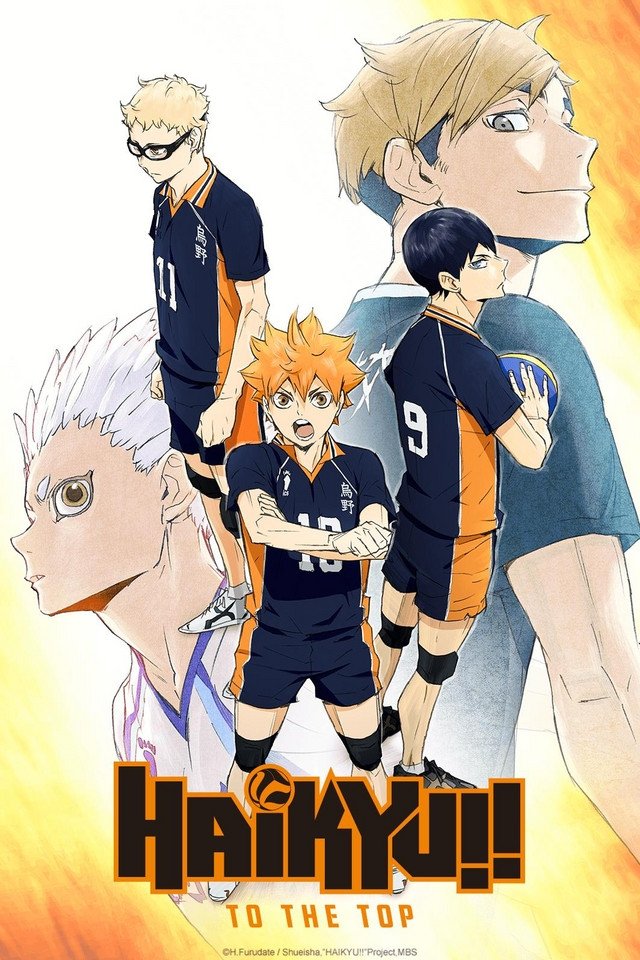
I can never go wrong with Haikyuu, it seems. Whether reading the manga or watching the anime adaptation, I always get giddy with adrenaline, ready to see what happens next. To The Top's first cour is another bright spot in this franchise. There's more great story progression, more great character development, more great animation (even if the animation style has shifted and is supposed to face hiccups in the second half), more great new score pieces, and more great voice acting. I can't wait to dig into the Karasuno and Inarizaki match after a couple more shows. I think watching it with Luke is going to be really special. Plus, I'm a little over the halfway mark in the Kamomedai game, and even knowing how it ends, it's going to be painful. Time for me to buckle my seatbelt for Jack and Haikyuu in 2021. I might shed some tears.

The final score for both cours is still TBD (as I want to do a review on both), but if it's a 10/10 again, don't be shocked.

#2


Given

I've seen and read a little more BL these past couple years, and this runs circles around other titles. There was so much care put into the anime adaptation; it makes me ready to dig into the manga, whenever that will be. Yuniko Ayana fleshes out the characters and the relationships they're in so well, you really come to know every facet of them. And we're only on the tip of the iceberg when it comes to Haruki and Akihiko's relationship. That movie's going to be a trip. I think Lerche captured Natsuki Kizu's art style perfectly, the score is peppy and emotional at all the right places, and the voice acting and insert music never disappoint. I'm really happy a yaoi anime like this exists, one future generations can point to and say, "Here's a romance that won't make you feel like one person's taking advantage of the other." Given was such a pleasure to watch. Not only am I happy I got to it in March, I'm excited by what will come next.

10/10

As promised, here are some of the other shows I talked about throughout the year that had an impression on me in some way:

Bakemonogatari

Black Butler II's entertainment value

Full Metal Panic? Fumoffu

Kuroko no Basuke's second and third season

Namu Amida Butsu! Rendai Utena

No. 6

Shakugan no Shana: Final (Season 3)

#1


Run with the Wind

I didn't expect Run with the Wind to be as strong as it was, but it really delivered on all aspects. The story is engaging, with fantastic arcs and development that hits in different ways. The characters are charismatic and go on various journeys to achieve their own kind of greatness for the Hakone Ekiden. Production I.G continues to make their sports anime look polished and picturesque, and the score is filled with many memorable pieces that will take your breath away (courtesy of Yuki Hayashi). Plus, Sentai Filmworks produced one of their best English dubs to date with this show. Watching this show was an incredible experience (in part because I got to see the English dub early) and one I doubt will be re-created unless I watch it in Japanese in its entirety. Whether you're a sports anime fan or not, this series will find a soft spot in you. I guarantee it.

10/10


This past year has been great for Japanese record labels making their content available on streaming services, making it easier for an anime fan to access their favorite songs without trekking onto a sketchy site. I got lost in the depths of Spotify multiple times, at a loss for words. When I first realized how many of my favorite songs were on there, I spent about an hour on this one user's page, I completely forgot about a monologue I needed to practice for my Acting class (it happens sometimes). This has helped me not only track down stuff to add to my ever-growing Spotify playlist, but it's handy when I'm watching a show and want to listen to anime songs, in full, without having to pull up YouTube (that's even if they're on Spotify to begin with). Out of the five openings on my list today, four are available on the music streaming platform in the US.

Time to get disclaimers out of the way: All the openings are from shows I've watched this year, and I will be linking TV cut videos if uploaded by Crunchyroll through text of the song's title and GIFs from the opening or anime. That way, I don't have to replace links as much. Hopefully this list introduces you to some new bops, or you get to wave hello at some old favorites. I'll start with:

#5


"Staple Stable" by Chiwa Saito (from Bakemonogatari)

I briefly heard this when I was twelve and thought it sounded incredibly different then. I remembered an upbeat electro rock song with bright vocals. However, I think the actual song is better than what I thought it was. A cutesy instrumental, courtesy of Satoru Kosaki, has plenty of pep, from the keyboard and xylophone twinkles, the drums, and even the brief guitar solo. I also really like Saito's vocals here. Bits of Hitagi peak out as she sings about falling in love. Although the narrator's worried about where it'll go, they hope their partner can cherish them with all their soul. I loved whenever it came on in the anime, and it's been nice going back to it throughout the year. It's strangely comforting, even if Hitagi has plenty of bite with her words and the staplers she carries in her school uniform. While I did enjoy Miyuki Sawashiro and Kana Hanezawa's openings (and the latter not just for the memes), "Staple Stable" clicked for me in a way I didn't expect.

#4


Considering Given focuses on four members of an up and coming rock band, it makes sense the opening is pure J-rock, through and through. With appealing visuals to support it, vocalist (and sole member) Atsushi sings from the perspective of lead Mafuyu, still grieving over his ex-boyfriend's death by suicide. Yuki is still a part of Mafuyu's life, for every day, every season, and every weather condition. Despite those memories being painful, Mafuyu does have Yuki to thank for helping him move on in life and find something new to enjoy. Could this also include new love? The instrumentation comes together beautifully whether you're listening to the TV cut or full song. Atsushi shows off a great range, going from biting anger to deep sadness within a few bars. It's the kind of piece that perfectly hits all of Given's emotional moments before the viewer gets to them. Although I didn't get the chance to listen to this a lot after watching this anime, "Kizuato" still stuck with me throughout the year. It's beautiful and gets you ready for what's to come. I'm hoping I enjoy Centimillimental's next track for the Given movie just as much.

#3


GRANRODEO is a friend of the blog. Fronted by seiyuu Kisho Taniyama, this band has produced plenty of energetic songs used in anime I've loved throughout the years. Their stuff for Kuroko no Basuke, give or take a couple of their songs, is no exception. "Punky Funky Love" stands out because it's so much fun to listen to. It doesn't go as hard as their other songs for the franchise, and Taniyama and the instrumentation don't take things as seriously. Leaning in a more pop rock direction (with drops to some of their previous openings), the band's ready to bask in the glories of youth. They're rooting for Seirin to win the Winter Cup, but with no hard feelings for the losers. Winning is fun, but what's also fun? Spreading the love. Whenever I played this opening through when I watched the first half of Season 3, I broke out into hand chorography at the "na nanana nanananah"'s. Because GRANRODEO was having the time of their lives, so was I. Although I'm going to refrain from doing said hand chorography when this song plays on my playlist for others to hear.   

#2


This opening is the perfect statement of where the anime adaptation of Haikyuu is now. BURNOUT SYNDROMES has been behind two other amazing openings for this franchise, so it's only natural "Phoenix" is another winner. Kazuumi Kumagi's voice always has so much power to it. Here, it's no exception. The instrumentation supports him as he sings about Karasuno advancing through the Spring Tournament, risking everything they have in order to win. There will be hard times, but as long as the players give all they have, that will make them successful. "Phoenix" is one of those tracks that leaves me a little misty-eyed. It's an enjoyable piece that makes me proud for sticking to this point. Then again, I'd follow this series until the end of time...even if it's already finished its manga run.

#1


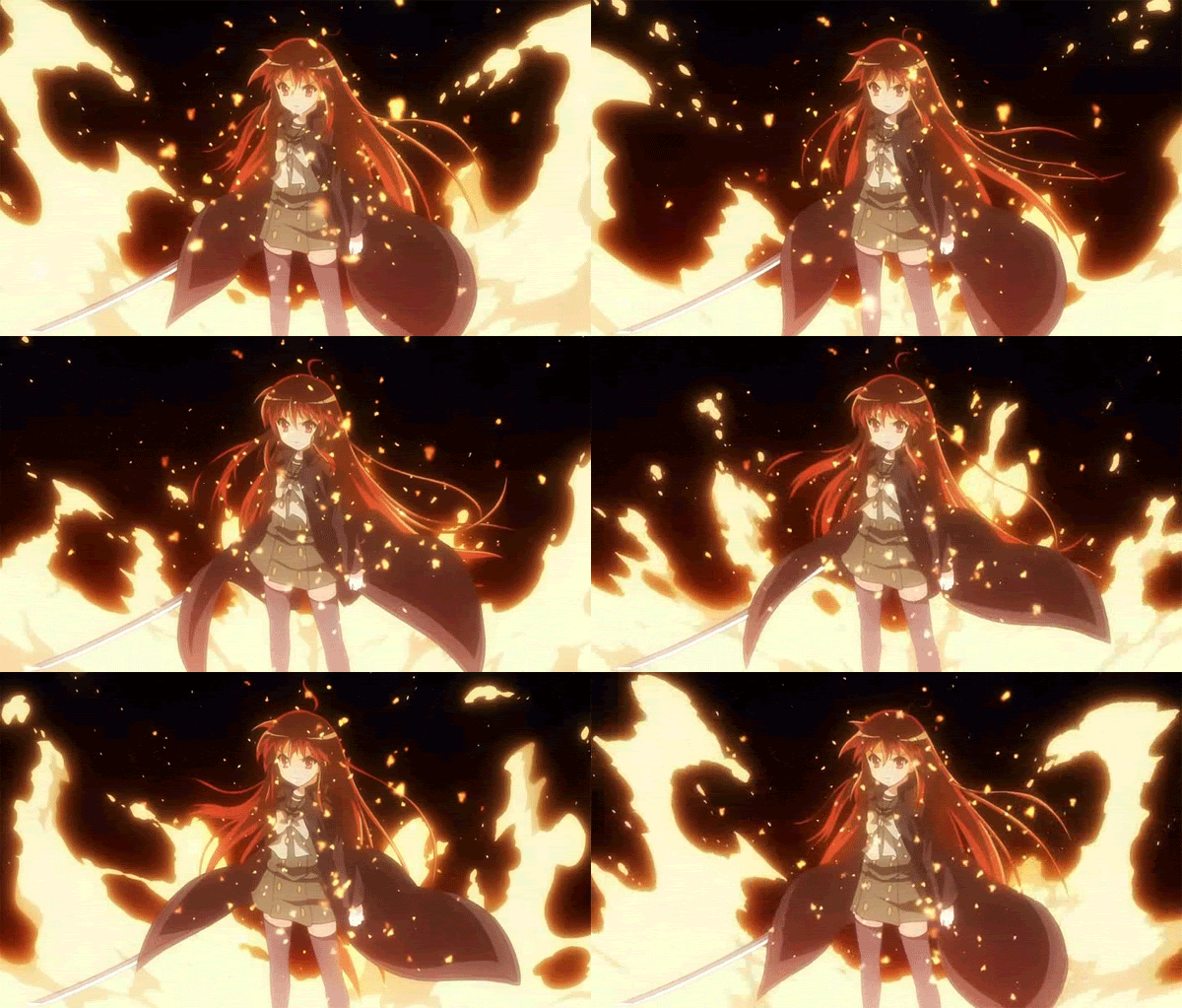
"Serment" by Mami Kawada (from Shakugan no Shana's third season)

I don't usually type out the f or s words on my blog, but in this case, I don't care: This opening fucking slaps. Although KOTOKO's "Light My Fire" is also amazing, this one goes harder for me. Maybe it's because I've enjoyed more of Kawada's music for this series? That's probably it. Considering Kawada wrote the first ending for Season 2, "triangle," from Kazumi's point of view, I can easily see this being from Shana's. After being captured by Yuji (who has merged with the Crimson God, Snake of the Festival, at this point) and escaping Bal Masqué's castle, she now has to fight against him. Although it hurts, she needs to push on, hoping one day, they can be together again. Tomoyuki Nakazawa and Takeshi Ozaki's arrangement pushes electro rock to its limit. The guitar and keyboards work seamlessly to support Mami Kawada's voice, which, like always, sounds awesome. Hearing this at 6:30 a.m. was always a nice little adrenaline rush. It made fantastic pump-up music. This was a nice send-off to my favorite Shana season. Even though Kawada's retired from performing, I'm still glad she found a place among anime fans: Delivering kickass openings with impeccable vocals and fantastic production.

And with that, both lists are finished! If you stuck to the end, thanks for reading. Here's to a 2021 where the world isn't as much of a mess, we can continue to binge all the media we want, and Sirius XM can dictate my music taste again. Cheers!

Saturday, December 26, 2020

Fall 2020: Surviving The Junior Year Fire Pits (So Far)


 Fall 2020: Surviving The Junior Year Fire Pits (So Far)

Warning: The following post may/will contain spoilers of various anime series and a movie. If you don't want to know what happens in any of the properties I'm talking about here, it's best if you join me once you've watched the first few episodes of each or the entire thing. But then again, if you want to take that warning with a grain of salt, feel free to stay put.

With that said:

Guess who's back? It's been a few months. I definitely wasn't expecting them to be as busy as they were, but my focus is always trained on school whenever it's in session. The start of the semester wasn't too stressful, actually (minus Stats). It was the middle and last half of the semester that took more energy out of me. My brother started battling a really bad bout of anxiety, schoolwork began to pile up a little too much for my liking, and I didn't get to watch as much anime. On the bright side, I've got a great work study job that isn't food service (which isn't bad, but I wanted better), am a DJ for my campus's radio station (which has been really fulfilling), and have gotten to expand my culinary powers in the kitchen. Apartment life's been treating me well, I'd say! That, and the Hallmark Christmas movies.

In today's post, I will be talking about the three shows (one's technically a movie but was split into three episodes on streaming platforms) I've been watching since I last posted on my blog. I did want to get to the new Haikyuu cour and IDOLiSH7 season while at school, but those are going to wait for now (re-watches of the first cour/season?). A review will be coming out for one show (which I haven't finished yet at the time of this update post), I plan on doing a special analysis post (but will still give the anime a score) for another at some point, and the other isn't getting anything. After this, I will be doing some year end lists to recognize the content I've watched this year. There were so many high notes, and I wouldn't have gotten through quarantine without some amazing shows and openings. Oh, and did I mention Hallmark movies?


Not the time, Jack. Not the time. Wait until the fifth Chronicle Mystery movie airs.

Let's go back to the anime:


Burn the Witch.

This would have been the property I reviewed had I had the energy/enthusiasm back in October, but I didn't. I also still don't. My expectations for this were pretty high. Considering I was a big Bleach stan at 14 (twenty episodes, four filler episodes, two movies, and sixteen volumes worth), I was curious about what Tite Kubo was going to do next after his biggest series came to an end. The premise looked cool, I was into the main characters, and the animation looked awesome. Released in Japan as an hour long movie, the content was split into three roughly twenty minute episodes when it streamed on Crunchyroll. Although it took me about a week and a half to get through this, I didn't mind too much at the end of the day. While Burn the Witch had its enjoyable moments, it never went beyond mediocre.

For starters, the adaptation team skipping over the events of the one shot wasn't a good idea. Kubo initially drew a one shot for a 2018 Shonen Jump issue before it was picked up for another "season" of four two years later. These chapters started running in August before finishing in September, the volume with all five chapters releasing on the same day as the movie's premiere in Japan. Although the one shot is referenced briefly after the final battle, I think adapting it first would have been wise. Since I didn't know what happened in it, I was thrown for a loop when we got dropped into the world with no explanation of how Balgo Parks became a Dragonclad or how the main characters came to know each other. Having it adapted first not only would have been useful, but it could have produced better foreshadowing for Balgo meeting Macy before the events of the movie.

Another thing Burn the Witch doesn't do well is exposition. It takes the easy way out of worldbuilding I see in bad YA fantasy and sci-fi. We either get poorly timed info-dumps or terms thrown into the script like we're supposed to understand them. I'm not sure if this is from Kubo's work or if it was something created during the adaptation process, but I still don't have a strong grip on Reverse London or the organization the two leads work for. Why was Wing Bind created? How are they tied to the Soul Society (which is nodded to in the third episode)? Did Ninny and Noel get recruited? There's so much glossed over, it's honestly surprising. Part of me wonders if it would have been easier to wait until there was more content to adapt. There's only so much ground you can cover in a little over an hour.

There are also too many characters that barely get screen time or development. I really came to enjoy Ninny for all the qualities she has that are similar to Ichigo (the main being that she's a smartass), but I also liked her dynamic with Noel. There were some aspects to the characters I liked, but that was pretty much it. Balgo and Macy make good foils, but the fact that they're based in what seems like petty crushes (the former's more innocent in his crush towards Noel, but Macy's crush on Ninny is "psychotic lesbian" at its finest) made me annoyed. At twenty-one, I'm too old for characters ignoring one half of a duo just because they like the other person more. That has late 2000's comedy anime written all over it. 

Bruno could have been an interesting antihero had his motivation been better explained. A great design can't be the only thing I like about a character. Why didn't he actually go through with killing Ninny and Noel in order to "make things easier?" Why did he suddenly switch from wanting to take out Elly/Cinderella to actually kind of saving her? There are so many questions I have, and that's not even touching the Wing Bind higher-ups, or what was the point of having Billy Banx Jr., someone not even involved in the final fight, take out Cinderella himself by just shooting a beam of light through his finger? Whenever I try to think about all these aspects, my brain turns to mush. This story and these characters could have been so much better, but it feels like there are so many holes that need fixing, it's hard to figure out what needs to be fixed first.

At least the animation is excellent. Studio Colorido brings the vibrancy of Reverse London and Kubo's characters to life. Movement is incredibly fluid (whether human or dragon), the scenery always looks stunning, and it's cool to see what aspects from Bleach's adaptation the staff took but also made their own. Keiji Inai's score had plenty of epic moments, and most of the pieces were more memorable to me than his work on Karneval and The Royal Tutor. I was also happy with the voice acting. It was nice to see some seiyuu I wasn't as familiar with have their time in the limelight and help shape these characters. In particular, Yuina Yamada brings a certain level of sophistication to Noel, it's hard for me to think about who else could have played her. I also enjoyed Asami Tano's brash Ninny, Shimba Tsuchiya's chipper Balgo (even if I didn't like his character that much), and Saori Hayami's dramatic range with Macy.

I wish I had better things to say about Burn the Witch, because while I liked some parts to it, it was still pretty underwhelming. The story and characters had too much missing that the animation, score, and voice acting couldn't fix. Had the one-shot been adapted before they dived into the first four chapters and had the adaptation team waited until there was more content, I could have seen this being more enjoyable then it was. There was some good action, but how good is it when you can't bring yourself to get invested in the story or characters?

6/10


Black Butler's second season.

I feel like at some point when I was fourteen, I declared I would never watch this season. At the time (and even now, TBH), there was/is nothing but bad things said about it. Completely anime original material, Yana Toboso developed two new characters with the anime staff, Alois Trancy and his butler, Claude. No one really seemed to like these two characters for reasons I didn't understand, and the ending was supposed to be a giant pile of s**t. Being the naïve confused weeb that I was, I took in a few spoilers, watched the OVA's (even the Alois focused one), and left it at that. However, when I noticed this popped back on Hulu and Netflix in the past year, I got curious. It'd been six years since I finished Book of Circus and six and a half years since I stopped reading the manga. My taste has drastically changed. Would I still find some of the elements that made me love the show in the first place, even though this material's been disregarded at this point?

The answer is obviously yes. At the time, watching Black Butler was a big step for me. It was darker than some of the anime I saw in 2013, it was one of the first shows I watched by myself, and the rampant homoeroticism flew over my head at fourteen but is completely apparent at twenty-one, especially between Sebastian and Ciel. However, there's a lot of charm to Black Butler. I love how some of the filler subplots from the first season make no sense, how colorful the animation is and seeing the budget improve with time, the engaging story at its core that's also gone off in various directions, the classical scores from both Taku Iwasaki and Yasunori Mitsuda (although I remember more from Iwasaki), and the characters themselves. Aside from one in particular:


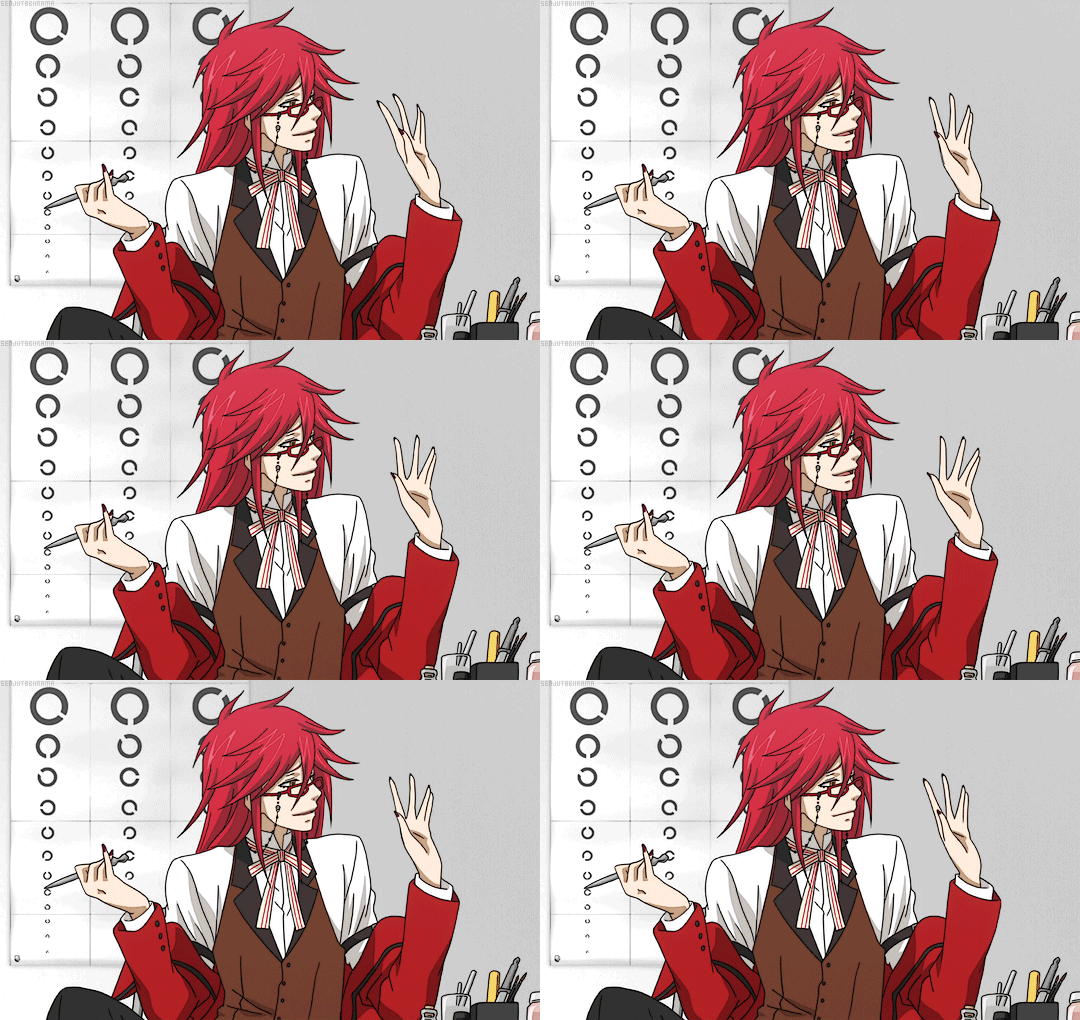
I enjoy how Toboso created such distinct personalities and how they carried over into the anime adaptation. There are so many characters to call favorites here, and I even found myself growing to the ones exclusive to the first season. Black Butler was also pivotal in me realizing I was queer, although I just didn't know at the time. Grell was the main reason.


Please show her more respect than her creators do and refer to her with female pronouns, thank you. It took me six years to do that. The same applies for Arashi Narukami from Ensemble Stars.


Another great queen, even though I haven't really dug into ES yet. One day...

But back to Season 2 proper, all the good feelings I got from this series came flooding back the minute I started it. It wasn't perfect, and I probably should have realistically re-watched Season 1 before diving in, but re-reading the Wikipedia/Wiki episode summaries worked for Kuroko no Basuke, and it actually worked for this. I laughed, I internally screamed, and I jammed out to "SHIVER" every single time (one of my favorite anime openings for sure). The first episode served not only as a great reintroduction to the franchise, but it was also a great introduction to Alois and Claude. Although it does take a while for the staff to dig into the start of their contract, some of the set-up to get there is brilliant. Alois is incredibly childish and can't face the thought of Claude wanting to obtain something he wants (Ciel) because it's shiny and more delectable. Meanwhile, Claude seems to care for his master to the point of thick sexual tension, but then it's revealed he's only a stepping stone in order to get Ciel's soul, something he eventually can't live without. Although both aren't likeable, they're fascinating, especially when you pit them against Ciel and Sebastian. The former may be childish, but the tragedy in his past forced him to grow up fast. And although the latter desires his master's soul, there's a restraint Claude's characterization lacks.

Aside from being an engrossing character study, I was really happy with the second half (minus the ending). Ciel starts the season having lost much of his memory of what happened in Season 1 (including the canon stuff). Anime viewers believed his soul was devoured, but it turns out a crow just snatched it, becoming a free present on the Trancy mansion's doorstep. Why Claude wanted Ciel's soul for this long? I have no clue. The adaptation team also fumbles in confirming that twist to the audience (we find out from Sebastian telling Soma in Episode 5, which is four episodes too late after not so subtle hints), but the payoff is wonderful. After killing Alois's physical body, Claude has the Trancy manor servants convince local police that Ciel is in fact their master. Ciel had just started to remember what happened prior to this season, which makes it all the more convenient when Claude melds Alois and Ciel's souls together so he can have the boy for himself. Ciel casts off Sebastian when the latter tries to save him, but there's more trouble waiting in the wings. It turns out Claude isn't the Big Bad. It's Hannah, another servant who has secrets of her own. I knew about her being a villain before this, but I still liked how it was revealed and executed. Alois's role in this plot was an actual surprise, and what started as a simple rescue mission turns into a feud between butlers in order to get their master back, what the season was building up to all along.

Getting to see all of the characters I loved as a tween was also great. Although I could have gotten more than glorified cameos (one episode with Undertaker isn't enough for the fourteen-year-old fanboy in me) and weird comedic bits, it added to the nonsensical part of Black Butler I think I might now appreciate. There's some beauty in this franchise tripping over itself that never fails to make me laugh. Grell got her time in the spotlight in overdramatic fashion, Ronald Knox made his anime entrance, and the other Phantomhive manor servants just ended up being themselves. Sometimes, that's all I want.

Although there were some iffy drops in the animation this season, I was impressed with the budget increases that balanced out some of those bits. The action scenes were well-done, the character designs had an added splash of color to them, and the storyboards for the main opening have got to have some of my favorite symbolism and framing of all time (minus the homoeroticism since Alois and Ciel are minors). Just don't bring up the CGI horses. Taku Iwasaki's score had plenty of classical punch to support this show's content, whether comedic or dramatic. Finally, the voice acting continued to be excellent. Nana Mizuki did such a great job with Alois's spoiled and heartbroken sides especially. While her voice sounded like Inner Moka's, it was interesting to see her go at it from the angle of a teenage boy. Takahiro Sakurai also did well, Aya Hirano got to show off more of her range before that scandal made her lose work, and everyone else still sounds fantastic. What I've heard of the dub also holds up, too. 

However, that doesn't mean this season doesn't have its problems. Most of Episodes 2-6 feel like padding to stall any development beyond what the writers can control. The Phantomhive servants seeking out a mysterious white stag? Ciel and Sebastian taking a train ride in order to investigate a sarcophagus? The Trancys holding a costume ball where the supporting characters wear culturally appropriative costumes? It all feels random. Granted, the last thing I mentioned does get the plot moving when Claude and Sebastian sign a contract to make Alois the new subject of Ciel's revenge, but it still takes half the show for anything substantial to happen. Even though I watched half the show in two days, it still lagged. I don't think it helps matters when most of the writers for this season hadn't written for the anime before, and they all wrote for the first half (although I didn't mind some episodes on their own).

There are also points where the homoeroticism becomes distracting (not to mention problematic). I'm not just talking about Ciel and Sebastian's relationship here; I'm talking about when the writers try to create sexual tension between Alois and Ciel. Again, they're minors. It's one thing when we get Claude creeping over Ciel's legs (which is still gross, don't get me wrong), but it's another when Alois licks Ciel's face after wondering what color his eye will turn near death and stating that he wants him. I get Alois gamed the system in his past by becoming the former Earl Trancy's sex servant. Him lusting over Ciel still grossed me out. I did my best to shut my brain off as well as I could during these moments, yet I couldn't ignore how creepy the whole thing was.

Like other reviewers have claimed, the ending is really weird. Before forming a new contract with Hannah, Alois (in Ciel's body) decides to turn Ciel into a demon once he is revived. That way, both Claude and Sebastian won't be able to obtain the boy they hold dear, as his soul will be destroyed. When this contract breaks, Sebastian and the new demon Ciel the only ones left standing, they go back to the Phantomhive manor. They live there for about a month before the two leave. You'd think they'd leave earlier given what happened, but no. The charade's more important, I guess. Sebastian asks the servants to watch over the estate while they're gone, and the characters throughout the show get gifts and a letter informing them of the master's death. Although Sebastian can no longer serve Ciel in exchange for his soul, he is still bound to him by his contract, as a newly demonic Ciel won't let his butler forget. They stop at a field with purple and white flowers, where they will be together forever.

I still don't know what the ending was trying to do? Again, the build-up to it was great, and I knew it was coming (big shock), but I didn't like how it was done. It was interesting to see Sebastian reluctantly going along with what he's obligated to do, yet that's the only positive I have. Was it the only solution the adaptation team had to going this deep in developing the ending? Or were they unsure they'd get more material to adapt, so they decided this was the best way out? I can easily imagine Mari Okada working on the final episode in the same vein as that one Snooki clip. No wonder someone who edited Black Butler's Wikipedia page called the Book of Circus adaptation a soft reboot. It essentially was after the mess this ending was to the fanbase.

Despite these problems, however, I was still incredibly entertained by Black Butler II. It was messy, parts made me scream at my laptop, and I still don't know why the ending exists, but that's all part of the fun. Plus, at least we've got the OVA's to wash out the bad taste this season leaves in our mouths. Oh, and Grell. There's always Grell.


In the future, I'd love to talk about both seasons in contrast. That'll come after I re-watch them, though. Having a fresh perspective on Season 1 will be a help.

I also most definitely bought Season 2 off of eBay for under fifty bucks as an end of semester present after I finished it. I regret nothing. The FUNimation Anime Classics set's a collector's item.

7/10

This leads me to the series I'm watching now:


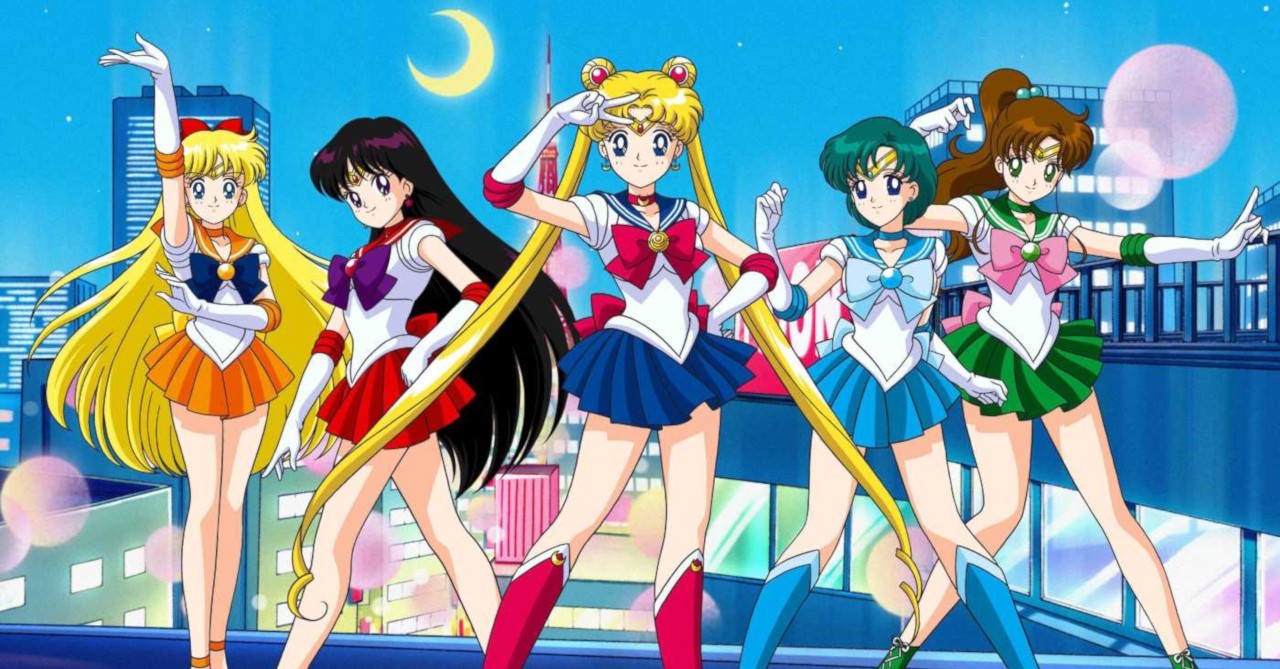
Sailor Moon's first season.

This has been a long time coming. Sailor Moon means a lot to me not only as an anime viewer, but for who I am today. If I hadn't stumbled onto the Sailor Moon SuperS movie DVD at the library when I was five, I'm not sure I would have gotten as much into anime as I am now. This franchise brings me back to a time where there was less to worry about, getting lost in the transformation sequences and the ending of the S movie. There's so much history to this show for me. I've enjoyed following the Viz Media dub as it's come out, and although the original dub will hold a special place in my heart (despite some of its off acting and script), it's been great to watch episodes I've never seen full before outside of GIF's and photos. I even enjoyed Crystal despite its problems in the first year. So now that I'm a junior in college, it seemed like the perfect time to finally dig into the series I'd only seen snippets of.

About two and a half years ago, Luke bought the first half of the first season at Best Buy with a friend of ours from college. It sat in our collection, not getting played, until we brought up the idea of actually starting it before this current school year. Now that we're almost done with it (at the time of this post going up, we have 13 episodes left), I have another part of my heart to give to this series. Although it isn't perfect (the Nephrite and Naru arc was icky), there's still so much charm in seeing Usagi's journey from the beginning. I really like what the adaptation team did to expand the characters and the world Naoko Takeuchi created. The Sailor Senshi are more than just Usagi's comrades. They're fleshed out characters who add some punch to the team. The animation is incredibly colorful and stunning for the early 90's, and the score is classic magical girl at its heart. The new dub is also mostly well-acted, and despite it only being one season, you can tell how much the cast has grown and how comfortable they're starting to get in their roles before the halfway point. The episodic monster of the week formula may be a little old for me, but now, all the shirts and plushies I've collected have finally paid off. I can't wait to get further into the original show and post about it here. The form it'll take is unknown, but I'm excited, regardless. Maybe I'll compare and contrast it with Tokyo Mew Mew, which I'm also watching now (and will cover in the future)? We'll have to wait and see.

In the meantime, that's going to do it for me. I hope you all have a great rest of your holiday season, spend quality time with your families, follow COVID guidelines, and learn something new about the world around you. I'm hoping to get a year-end list post out before the end of the year, but if not, you'll see it in early 2021 (along with a special announcement about this blog's future). Until next time: